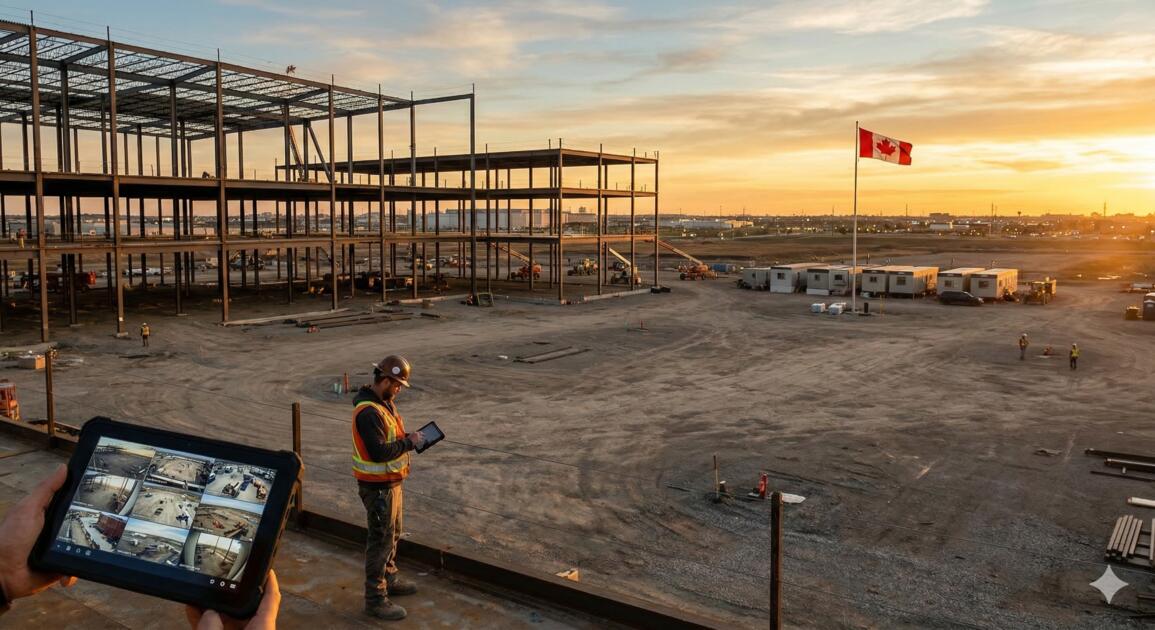
Canada's Construction Labour Shortage: How Technology Fills the 108,000-Worker Gap
January 28, 2026
Canada’s construction industry is building more than ever — and running out of people to do the work.
The numbers are stark. Over the next decade, the industry faces a projected shortfall of 108,000 workers. Roughly 270,000 experienced tradespeople are heading toward retirement, and the pipeline of new entrants is not keeping pace. The industry needs to recruit and retain over 380,000 new workers by 2034 just to meet current demand — before accounting for the surge in infrastructure spending that provincial and federal governments have committed to.
This is not a future problem. It is happening now. Every general contractor in Ontario knows the reality: finding qualified supervisors, operators, and skilled tradespeople takes longer and costs more than it did five years ago. Projects are stretching because crews are smaller. Quality control suffers because supervisors are spread across too many sites. And the pressure is only going to intensify.
Technology is not going to replace construction workers. But it is filling critical gaps — extending the reach of the people you have, reducing wasted time, and making it possible for smaller crews to deliver the same results.
The Scale of the Problem
270,000 Retirements, Not Enough Replacements
The construction workforce in Canada is aging. The median age of a construction worker is now 41, and the skilled trades — electricians, plumbers, heavy equipment operators, ironworkers — skew even older. Over the next decade, 270,000 experienced workers will retire, taking decades of institutional knowledge with them.
Meanwhile, enrolment in apprenticeship programmes has not kept up. Despite government incentives and marketing campaigns promoting the trades, the industry is still seen by many young Canadians as physically demanding, unstable, and lower-status compared to office-based careers. The result is a growing gap between demand and supply.
Ontario Feels It First
Ontario’s construction sector is under particular pressure. The province has committed over $223 billion in infrastructure spending over the next decade — the largest public infrastructure investment in provincial history. Highway 413, the Ontario Line, the Bradford Bypass, hospital expansions, housing starts — all competing for the same limited pool of workers.
At the same time, Ontario’s residential construction sector is racing to meet federal and provincial housing targets. The province needs to build 1.5 million homes by 2031. The labour to build them does not currently exist.
90% of Leaders See Technology as Essential
A recent industry survey found that 90% of construction leaders now view AI, digital tools, and automation as essential to their operations. Not nice-to-have — essential. The executives who dismissed technology as a distraction five years ago are now asking their teams to evaluate every tool that can reduce the number of bodies needed on-site.
How Technology Fills the Gap
The labour shortage is not going to be solved by technology alone. Canada needs more people entering the trades, better retention programmes, and reformed immigration pathways for skilled workers. But technology addresses the immediate operational reality: doing more with fewer people.
Remote Monitoring Reduces Supervisor Travel
The traditional model of construction supervision requires project managers and superintendents to be physically present on-site. For companies managing multiple projects, this means senior staff spend hours every week driving between sites — time that adds no value to the project.
Remote construction monitoring changes this equation. When a project manager can pull up live camera feeds from three different sites on their laptop, they can assess progress, identify issues, and direct site staff without leaving their desk. The physical site visit still happens, but it becomes targeted and intentional rather than routine.
One PM monitoring three sites remotely accomplishes what previously required three PMs or three days of windshield time per week. That is a direct labour multiplier.
AI-Powered Progress Tracking Replaces Manual Reporting
Weekly progress reporting is one of the most time-consuming administrative tasks on a construction project. Someone — usually a superintendent or project coordinator — walks the site, takes photos, compares conditions to the schedule, and writes a narrative report. This process takes hours and produces documentation that is inherently subjective.
AI-powered monitoring systems are automating this process. Cameras capture site conditions continuously. AI compares current conditions to previous captures and identifies changes — new concrete poured, steel erected, formwork removed. The system generates progress reports automatically, freeing supervisory staff to focus on managing work rather than documenting it.
Timelapse Analytics Reveal Productivity Patterns
Construction camera footage is not just documentation — it is data. When you have a continuous visual record of a site operating over weeks and months, you can analyse patterns that are invisible to the human eye during a site visit.
Where are crews spending the most time? How long does material staging take before work can begin? Are there periods of the day when activity drops off? Which areas of the site consistently fall behind schedule?
These insights allow project managers to optimise crew deployment, reduce idle time, and address bottlenecks before they cascade into delays. On a project where every hour of labour is precious, this kind of analysis translates directly into productivity gains.
Cameras as Force Multipliers, Not Replacements
It is worth emphasising what construction cameras change and what they do not. Cameras do not replace workers. A camera cannot pour concrete, weld steel, or install electrical systems. What cameras do is extend the reach and effectiveness of the supervisory and management staff you already have.
A superintendent who can review camera footage each morning before arriving on-site starts the day with a clear picture of what happened overnight, what areas need attention, and what resources are needed. They spend less time assessing and more time managing. That is the force multiplier effect.
Safety Monitoring Without Additional Personnel
Safety compliance is non-negotiable, but dedicated safety personnel are increasingly difficult to hire and retain. Construction cameras provide a supplementary monitoring layer — not replacing safety officers, but extending their coverage.
Cameras can capture PPE compliance across the entire site, not just the areas the safety officer happens to walk through. Time-stamped footage documents safety practices for compliance records and incident investigations. And on projects where safety violations are identified, the footage provides the objective evidence needed for corrective action.
Practical Implementation for Stretched-Thin Teams
Start with Your Highest-Value Sites
You do not need cameras on every project to see the benefit. Start with your largest or most complex projects — the ones where supervisory travel time is highest and the cost of delays is greatest. Once the workflow is established, expand to other sites.
Integrate with Your Existing Tools
The value of remote monitoring increases when it connects with your existing project management workflow. Camera feeds and progress reports should be accessible from the same platforms your team already uses — whether that is Procore, Buildertrend, or a simple shared dashboard.
Train Your Team on Remote Workflows
The technology is straightforward, but the workflow change requires adjustment. Supervisors accustomed to morning site walks need to learn how to use camera feeds for the same purpose. Project managers need to trust remote observations enough to make decisions without being physically present. This is a cultural shift as much as a technological one, and it takes a few weeks to settle in.
Measure the Impact
Track the metrics that matter: number of site visits per week, time spent on progress reporting, response time to on-site issues. Most teams see a measurable reduction in travel time within the first month and a significant improvement in reporting efficiency within the first quarter.
The Bigger Picture
Canada’s construction labour shortage is structural and long-term. It will not be solved by any single intervention — not immigration reform, not apprenticeship programmes, not technology. It requires all of these simultaneously.
But technology is the lever that construction companies can pull right now, this quarter, on their current projects. Remote monitoring, AI-powered reporting, and productivity analytics do not require policy changes or workforce development timelines. They require a camera, a cellular connection, and a willingness to work differently.
The companies that adopt these tools now will have a competitive advantage in hiring, project delivery, and profitability. The ones that wait will continue to ask their people to do more and more with less and less — until something breaks.
Frequently Asked Questions
How quickly can remote monitoring be set up on a new project?
Most camera installations are completed within 24 to 48 hours. Once the camera is mounted and connected, live feeds and automated timelapse capture begin immediately. The transition from traditional supervision to a remote-assisted model typically takes two to three weeks as team members adjust their workflows.
Does remote monitoring work on sites without internet access?
Yes. Construction cameras with cellular connectivity operate independently of site internet infrastructure. They use 4G/LTE networks to transmit footage to the cloud. In remote areas with limited cellular coverage, options include satellite connectivity or local storage with periodic uploads.
Will workers resist being monitored by cameras?
In practice, resistance is minimal when cameras are framed correctly. Construction cameras are positioned for progress documentation and site security, not individual worker surveillance. Most crews appreciate the safety benefits — knowing that footage exists in case of an incident — and the documentation that protects them in disputes. Transparency during site orientation about camera purposes and locations eliminates most concerns.
How much does a construction camera system cost compared to hiring additional supervisory staff?
A construction camera system starts at $250 per month per camera. A full-time superintendent in Ontario costs $80,000 to $120,000 annually plus benefits. If camera-assisted remote monitoring allows one superintendent to effectively manage two sites instead of one, the cost savings are substantial — typically 10x to 20x the camera investment.
The 108,000-worker gap is not closing. The question is whether your company adapts its operations to the reality or continues to compete for a shrinking pool of talent on the same terms as everyone else.